

Editor’s Note: Continued from Operation ‘Aure’: The Northern Military Counter-Rebellion of July 1966 (I)
The May Riots
Following General Ironsi’s broadcast on Tuesday evening May 24, making Nigeria a Unitary State, initially peaceful demonstrations by civil servants and students began on Friday May 27. On Saturday May 28 copies of the June edition of Drum magazine arrived in the North, containing two provocative articles; “Why Nigeria Exploded” by Nelson Ottah which allegedly derided northern leaders, and “Sir Ahmadu rose in his shrouds and spoke from the dead” by Coz Idapo, which allegedly featured a cartoon in which the revered late Premier was asking for forgiveness from Idapo. Some authors have blamed these articles for the subsequent outbreak of wanton violence and barbarity on Sunday May 29 continuing through to June 4-5 which led to at least 600 Igbo deaths (according to the London Telegraph), particularly in northern provinces like Kano, Bauchi, Sokoto, Katsina, and Zaria. Indeed the Hausa phrase “A raba” meaning “Let us separate” may first have been used by Bauchi rioters in May. Interestingly, there were no May riots in Borno, Ilorin and Makurdi. The riots were particularly bad in Gusau. But in Sokoto township the combination of intervention by the Sultan, the deployment of an Igbo dominated mobile Police Unit and the decision by Igbo traders there not to fight back led to quick stabilization of the situation.
One development during the May riots which exposed the military vulnerability of the Ironsi government was the fear to deploy troops for internal security duties. Back in March, increasingly concerned about restive northern troops, General Ironsi had issued an order that soldiers were not to be issued ammunition even for target practice. During the May riots in the north, because of the dominance of northerners in the rank and file of infantry units it was feared that soldiers would not take orders to shoot against fellow northerners in defense of Igbos.
The Ironsi regime, shaken by the riots and unnerved by its lack of confidence in the state machineries of coercion, reacted to the riots by blaming foreigners. It deported Major Boyle (rtd) along with British correspondents Schwarz and Loshak, and took the conciliatory position that the May decrees were only transitional measures pending the return of civil rule. The government promised massive assistance to educationally backward areas of the country and sent campaign vans to explain itself in vernacular all over the country. Unfortunately, one of the deported British journalists (Walter Schwarz) went back to Britain and wrote an article in the Guardian on June 25, titled: “General Ironsi’s trust in his friends leads Nigeria back to tribal strife.”
On June 1st, General Ironsi issued orders that anyone displaying provocative pictures or singing offensive songs should be arrested for incitement and would face 3 months imprisonment or 50 pounds fine or both (Decree 40). Realizing the folly of hitherto ignoring traditional lines of communication, he sought to enlist the support of the Emirs to calm down the people. During a June 1 conference of Northern Emirs and Chiefs with Lt. Col. Hassan Katsina, the regime even went as far as saying that the May decrees did not affect the territorial divisions of the country, and promised a constituent assembly and referendum on any new constitution.
On June 8, the regime restated its constitutional position. After this, the Sultan of Sokoto broadcast an appeal for calm on June 17 and asked those who had left the North in fear to return. On June 24, the government announced that it would set up military courts to try nepotism and corruption. Simultaneously, nine (9) northerners were detained (including the editor of Gaskiya Ta Fi Kwabo), and an army company was deployed to Sokoto as a permanent garrison allegedly under an Igbo Major. This otherwise routine internal security move which resulted from intelligence reports following the May riots caused apprehension locally since no such military unit had been deployed there for many years going all the way back to the days of the British and the Satiru rebellion. The editor and cartoonist of the “Pilot” in the Eastern region were also detained for a cartoon which showed the Ironsi government as a large Cock (which used to be the NCNC symbol) crowing ‘One Country, One Nationality’. Subsequently, on June 26, the Brett tribunal was appointed to inquire into the May disturbances – to the consternation of the North.
Still, the issue of what to do with the January boys remained a sore point and mutual suspicion remained. On July 13, Ironsi announced military prefects at local level, and proposed rotation of military governors. Northerners interpreted this as meaning that Ojukwu, already being viewed with suspicion for his public pronouncements about unification, was to be posted to Kaduna. There is, however, no evidence that this is what was intended.
In the meantime, other than one exploratory meeting with Lt. Col Hassan Katsina, old NPC politicians like former Defense Minister Alhaji Inua Wada (who was also an uncle to Lt. Col. Murtala Muhammed) and Aliyu Makaman Bida may have had unhindered access to unaudited NPC funds. Wada is alleged by some to have wooed disaffected NEPU and UMBC leaders like Aminu Kano and Joseph Tarka to share a common northern political vision threatened by the new order. However, Military and Police intelligence completely missed the boat when, based on nothing more than his personal relationship with the late Prime Minister and Premier, Alhaji Shehu Shagari was invited to Lagos in late July for 3 days of questioning about disposition of certain NPC funds during the first republic. The intelligence community was barking up the wrong alley – although it is also true that the houses of Inua Wada, Daggash and others were searched.
This was not to be the only alleged failure of intelligence in establishing the civilian linkages to and sponsorship of the events of May and subsequent coup in July. Ojukwu claims that he gave a tape of a conversation made in Kano about the planned July 29 coup to Ironsi who then passed it on to acting Police IG Kam Salem (a northerner), who by implication, buried it. Madiebo cites a flurry of other intelligence failures in the North including an alleged leak from an informant called Alhaji Suya who was supposedly a cousin of the late Sardauna.
Tensions within the Military
Quite apart from the shenanigan that led to General Ironsi’s assumption of power (also known as “civilian hand over”), the fundamental crisis of confidence within the military was borne out of the failure to try the January plotters according to the manual of military law. General Ironsi became hostage not only to radical opinion in the southern Press that hailed them as heroes but also to the curious five-point agreement he had negotiated with Nzeogwu in Kaduna back on January 17. Meanwhile tension and suspicion were rising in officers’ messes and barracks. Placatory visits were made to Barracks by Lt. Col. Gowon to appeal to northern troops to forgive and forget. Based on discussions and assurances by Ironsi, other northern officers like Major Danjuma also tried to calm down the troops and assure that the January mutineers would be tried in due course since the C-in-C had described them as rebels. On his part, every time he was asked, General Ironsi would respond by saying “Justice will be done.” On one occasion he offered a pay raise to troops.
In the years since the end of the Ironsi regime it has been alleged by commentators and propagandists that Ironsi personally tasked Gowon to investigate the January coup. Gowon tacitly denies this. The coup had already been investigated by the Police. That report, according to then Captain (now Brigadier) Baba Usman (rtd), Ironsi’s liaison with the Police, was ready in March 1966. In fact, according to Professor Elaigwu, a panel was set up under Col. Nwawo to follow up the Police report with formal charges, but it never sat. Meanwhile, as is eloquently described in the book “Why we Struck” by Major Ademoyega, each time the matter was brought up for discussion at the SMC, Colonel Fajuyi, Governor of the West, was opposed to any trial. (Funny enough, as will be seen later, when trying to contain the revolt in Lagos on July 29, Brigadier Ogundipe tried to sell a dummy by telling Captain JN Garba that the report on the January boys had only just reached him that morning)!
Meanwhile rumors were swirling. It was alleged that the mutineers were being treated specially in prison, illegally receiving full pay along with a prison allowance, some getting promoted, and granted access to their families. Some of these rumors can now be confirmed to have been false. The controversy about their pay can easily be settled by referring to Sections 149 and 150 of the Military Forces Ordinance No 26 of 1960. Part VII on Pay Forfeitures and Deductions states that pay should continue before the verdict. At the time of the Ironsi regime that law was in force. However, what was not allowed under the law was an arbitrary delay in proceeding with trial, any form of prison allowance or artificial separation from other political prisoners.
Regarding the widespread reports about seven of the plotters being promoted in jail, that too is untrue. Only one officer among those arrested, 2/Lt Ojukwu, no relation of the Colonel, was promoted Lt – and it may have been an error. As regards a ‘Major Okafor’ being promoted, Major DC Okafor/N74 was the one promoted, not Major DO Okafor/N73. Major DO Okafor was the January plotter.
Another source of suspicion in the Army was the promotion exercise carried out in May. There were three complaints about it. First that it should not have happened at all because there was a moratorium on promotions in force at the time. Second that it “favored” Igbo officers and consolidated their control of the military. Third, that northerners were also “favored” along with Igbos while Yoruba officers were “marginalized”. The sources of each of these lines of thinking is easy to guess. Eleven (11) Majors were promoted substantive Lt. Cols while fourteen (14) Majors were made temporary Lt. Cols. Of these, 19 were Igbo or Igbo speaking easterners and midwesterners, 5 northerners (Katsina, Akahan, Shuwa, Muhammed, Haruna) and one Yoruba (Olutoye). On the surface, it looked a crude attempt to favor Igbo or Igbo speaking officers. But in reality, no Igbo or Igbo speaking officer was promoted who was not due for promotion, considering that between 1955 and 1961 the vast majority of officer recruits were of Igbo or Igbo speaking origin. There was no quota system for officers at that time and those who joined then had risen to middle level ranks by 1966. However, the appearance of a sudden lopsided “pro-Igbo” promotion exercise carried out by an allegedly “Igbo regime” when there was a moratorium in force and tension in the barracks was a public relations disaster, particularly since there were quite a few Yoruba officers (Obasanjo, Sotomi, Adekunle, Ayo-Ariyo and Rotimi) who were clearly bypassed. There is a body of opinion that, unknown to the public, three Igbo Majors (Obienu, Aniebo and Chude-Sokei) were also bypassed, but followed soon after by the Unification decree, the imagery of the promotion exercise removed all doubts about prevailing conspiracy theories.
Northern civilian propagandists used the tools of psychological warfare and worked tirelessly to incite the northern military. In the Army’s official history, General Gowon said “The northern politicians infiltrated the Northern soldiers and officers, trying to convince them that there was a need for them to retaliate.” General Babangida put it this way: “There was a very calculated and subtle but very efficient and effective indoctrination of the Northern officers by civilians. They kept hammering on it that our leaders had been killed and we were doing nothing; that we were cowards.” General Shuwa (rtd) described documents passed around Kaduna purporting to show plans for senior Igbo officers to meet at Hamdala Hotel to plan the liquidation of remaining northern officers after January. But Babangida also said: “…there was a threat that the Igbos wanted to take revenge. Now sitting down and looking at it, quite honestly in retrospect, I think we used that so as to gain support, to get people committed so that you didn’t get caught. It was preemptive.” Indeed, the rumors were so detailed that operational code names using animals were even ascribed to parts of the alleged grand Igbo plot to continue Operation Damisa (Leopard) which had already taken place on Jan 15 . These were Operation Kura (Hyena) to eliminate certain chiefs, Operation Zaki (Lion) to eliminate remaining chiefs and finally Operation Giwa (Elephant) to carve the country up into individual districts administered by Igbos. This kind of uncorroborated preposterous disinformation is what informed the nervousness with which certain traditional rulers approached the conference of traditional rulers in Ibadan on July 28.
However outlandish they were, civilian agents provocateur were unwittingly aided by inept handling of public relations by the Ironsi regime and real provocations by some Igbo civilians and soldiers. In his biography titled “Power with Civility” by Oleka and Ofondu (Neskon 1998), Rear Admiral Ndubuisi Kanu, an Igbo easterner who later fought in the Biafran Navy, states: “That Igbos, including soldiers in the barracks, teased their Northern counterparts about what they regarded as swapping of fortune, served to fray tempers. It was not long before Northerners vented their spleen on their Igbo guests. An orgy of killing of Igbos throughout all nooks and crannies of the Northern Region kicked off.” In his book, “Revolution in Nigeria, Another View” late General Garba describes how his soldiers in the Federal Guard broke down in tears in Jankara market in Lagos when they heard the album “Machine Gun.” General Danjuma (rtd) says even the wives of Igbo soldiers were taunting the wives of Northern soldiers.
All of this was amplified not only by the truly very violent nature of the January take over, but by a whispering campaign of highly provocative but unproven stories about the grotesque manner in which some of the northern politicians and soldiers had been killed in January. There are northern officers I have spoken to who still say Prime Minister Balewa had his phallus cut off and placed in his mouth by Majors Ifeajuna and Okafor. Another story had it that a kola nut was placed in his mouth after being shot to taunt the northern custom of eating kola nuts – a curious story considering that all Nigerian tribes, especially the Igbo, value kolanuts in their custom. Yet another tale had it that he was asked to turn around and pray and that while he was praying he was shot from behind creating a large hole. All of this was embellished by the story that he cursed all Igbos before he died. On careful thought, such a large hole could have been an exit wound, meaning he was more likely shot from the front – although an entry wound from a concentrated burst of SMG fire can be big. But if any given northern NCO had believed that he was so mistreated, one can see how Major Okafor was singled out for extreme treatment.
Same goes for Lt. Col Largema, Commander of the 4th Battalion, who was shot outside his room at Ikoyi Hotel. As late as the year 2000, former Army Chief Lt. Gen Danjuma (rtd) was still of the opinion expressed in the Army’s official history – which he has probably held over the years – that Largema’s corpse was thrown out of the 11th floor window at Ikoyi Hotel by Ifeajuna to the ground. However, I visited Room 115 in the old wing of Ikoyi Hotel myself to physically appreciate the setting in which that fine officer was killed. The room, right next to a stairwell, is on the first floor. The building has no 11th floor. His corpse was more likely dragged one floor down the steps to the waiting Mercedes car in the parking lot. It is bad enough and inexcusable that he was murdered in cold blood but if his corpse had really been thrown out the window from the 11th floor, Ifeajuna is lucky Ojukwu got to him before northern troops from Largema’s 4th battalion did.
Likewise, Nzeogwu’s destruction of the Premier’s lodge using an anti-tank weapon and killing of his wife offended the sensibilities of many officers and gentlemen including some Igbo speaking officers I have spoken to who shared Nzeogwu’s Sandhurst background. For example, in a telephone conversation, Lt. Col. Alphonsus Keshi (rtd) then Brigade Major of the 1st Brigade, described late Major Nzeogwu to me as a “murderer.” Onwatuegwu on the other hand, not only shot Brigadier Ademulegun but killed his pregnant wife – an abomination in African tradition. For some weeks after the coup, one could get a guided tour of Ademulegun’s blood spattered bedroom in Kaduna with the right connections at 1 Brigade HQ. Those who went for the tour did not emerge from it with any feelings that mercy should be shown if the perpetrator was ever caught. These were the sorts of emotions that friends and family and professional colleagues of the slain officers and politicians were dealing with in the months leading to July. For the military casualties in particular, the typical question was, “If your quarrel was with politicians why did you kill our loved relations, colleagues and senior officers in the military?”
In an interview back in the early eighties with Radio Kaduna, then Brigadier (later Major General) Mamman Vatsa, now deceased, is quoted by Elaigwu as saying:
“The July coup was motivated by the actions in January 1966 whereby an illegal action was legitimized. If you do that, you expect a counter reaction. July 29, 1966, was a reaction to an inaction against an illegal action…. Right from the beginning, the GOC, Nigerian Army regarded these people as ‘rebels’. If that was accepted, the immediate thing was to take the necessary action to get them disciplined legally. If this was not done, then the GOC was condoning indiscipline or treason. Rather than punish men from his army who were on mutiny, he was now asking the civilian government to hand over to him before he could maintain discipline in an organization of which he was in charge…. In the first instance, he shouldn’t even have taken over the power….”
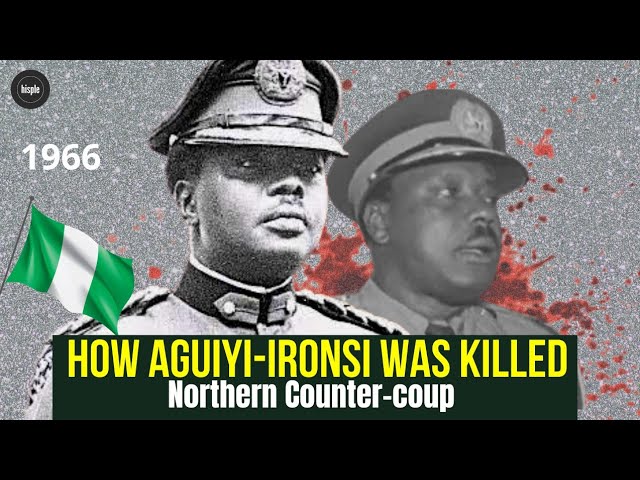
In the final analysis, though, certain events conspired to push northern troops over the edge. In July, many northern recruits were turned away from the Army depot in Zaria and preference allegedly given to southerners. For example, the entire batch from Sokoto province was rejected. It is entirely possible that such rejections were based on principle but in the prevailing environment of suspicion the implications were alarming. Secondly, General Ironsi told the 4th battalion a week before the mutiny that they would rotate with 1st battalion in Enugu, which happened to be Governor Fajuyi’s former unit which he had commanded for three years. Unfortunately for Ironsi the announcement not only caused anxieties usually associated with change but played right into an unfounded rumor that had been making the rounds that a train carrying the 4th battalion was to be derailed by Igbo sappers between Makurdi and Otukpo. All of this for a battalion that lost three former commanding officers in January (Maimalari, Kur Mohammed and Largema) and was a thoroughly politicized pro-Akintola outfit, molded in the furnace of Ibadan politics. When, therefore, soldiers of the 4th battalion were asked to provide guard duty for Ironsi and Fajuyi at the Government House Ibadan on July 28, 1966, it was like asking the Fox to guard the Hen House. On July 29, 1966, mutinous soldiers, taking a cue from their colleagues elsewhere surrounded the premises, arrested the General and his host and eventually kidnapped them both, taking them to mile 8 on Iwo Road where they were shot and buried.
By the time the July 1966 mutiny had run its course, no less than 213 predominantly Igbo officers and other ranks had been killed. An untold number of civilians also lost their lives.
Planning to Overthrow General Ironsi
There is no doubt that fairly soon after January 15, the motive for a northern counter-coup also known as “return match” was established. What remained were the means and the opportunity. In Kaduna, the Platoon Commanders Course at the NMTC provided an opportunity for young northern subalterns to come together to share ideas and vent frustration. These officers included Lts. Shelleng, Hannaniya, Muhammadu Jega, Sani Abacha, Sali, Dambo and others. They held secret meetings and even wrote a letter of protest to the Chief of Staff (Army) – Lt. Col. Gowon – openly stating that if senior northern officers did not take action within a certain time frame, they would, and that senior northern officers would have themselves to blame for the catastrophe. Indeed, the Ironsi government was sufficiently alarmed that on at least two occasions the course was suspended. For a brief period, thereafter, things were relatively quiet, but not for long. Matters began to stir in Lagos.
Although it is said that practically all northern officers serving in Lagos, Abeokuta, Ikeja and Ibadan eventually became involved, three officers formed the innermost circle of the plot to overthrow Major General Aguiyi Ironsi. They were T/Lt. Col. Murtala Muhammed (Inspector of Signals), T/Major TY Danjuma (General Staff Officer II, SHQ) and Captain Martin Adamu (2nd Battalion, Ikeja). The coup leader was T/Lt. Col. Murtala Muhammed.
According to late Major General Garba (rtd), others involved in planning in the South include Captain JN Garba, Lt. William Walbe and Lt. Paul Tarfa (Federal Guards), Lts. Muhammadu Buhari and John Longboem (2nd battalion), Lts. Pam Nwatkon (Abeokuta garrison, Recce), Lts Jerry Useni, Ibrahim Bako and Garba Dada (4th battalion, Ibadan), and Lt. Shehu Musa Yar’Adua (Adjutant, 1st battalion, Enugu). Air force conspirators included Majors Musa Usman and Shittu Alao. However, other officers were clearly involved because Muhammed compartmentalized the planning and also encouraged officers to recruit additional local conspirators and storm troopers. Examples include Lts. Nuhu Nathan and Malami Nassarawa at Ikeja, IS Umar in Abeokuta, Abdullai Shelleng, Haladu, Magoro, Obeya and Onoja in Ibadan and Captains Jalo and Muhammadu Jega in Enugu, among others.
Active planning for the coup began after the promulgation of the Unification decree. In fact, there was a brief scare in Kaduna when false rumors of Lt. Col. Hassan Katsina’s arrest in Lagos by Ironsi after the May riots rent the air. Katsina had gone to Lagos for a meeting at which fruitless efforts were made to get the decree repealed. When he eventually returned to Kaduna, he found the airport surrounded by irate northern soldiers.
Captain Garba was recruited in Lagos by being told that northerners were planning a coup to “pre-empt” an expected one by Igbo officers. This so-called expected Igbo coup was also known as “Plan 15” – part 2 of the so-called final solution to the northern problem perhaps (as the propaganda went) made all the more urgent by the killings of Igbos in the North during the May riots. Lagos conspirators, who were being closely watched, met in various locations, including their private cars, Muhammed’s house, Garba’s house, and during games at Abalti barracks.
At Ibadan, Lt. Col. Muhammed would often drive into town from Lagos, pick up Ibrahim Bako and Abdullai Shelleng at a pre-arranged location and drive around without stopping while they discussed.
The Kaduna group was not as formally organized as the Lagos-Ikeja-Abeokuta-Ibadan axis at this stage although it later consolidated and was in the habit of having meetings at Lugard Hall with northern civilians. However, Capt. Ahmadu Yakubu was the liaison who would drive from Lagos to Kaduna with messages from Lt. Col. Muhammed for Lts ADS Wya, Ibrahim Babangida, Garba Duba, BS Dimka, Dambo, Sani Abacha, Hannaniya, Salihi and others. Messages were also passed to the 5th battalion in Kano under Lt. Col Shuwa primarily for reasons of coordination. But Lagos was to be the fulcrum.
In order to keep tabs on what was going on inside the government, Lt. Col Murtala Muhammed maintained contact with northern civil servants in Lagos (like Muktar Tahir), while Captain Baba Usman of military intelligence provided insights into what the Army knew and did not know. Nevertheless, the Ironsi government had other mechanisms of information gathering outside official channels. For example, at least one officer, Lt. Jasper, then the intelligence officer at the 4th battalion in Ibadan, was suspected of passing information directly to Supreme HQ and perhaps even to Ironsi himself, bypassing the Army. All sorts of self-appointed civilian informants were also known to mill in and out of Army formations passing rumors to Igbo commanders who would then find ways to get it to Ironsi. Major Danjuma, at that time a staff officer, was attached to General Ironsi as a military scribe, dutifully taking notes at his public hearings.
At the outset of planning for the coup, late General Garba says in his book ‘”Revolution in Nigeria”, Another View’, that “We intended explicitly to kill no one. The aims were, firstly, to get Decree No. 34 abrogated; secondly, to bring the coup makers of January 15 to trial; thirdly, to accord due honor to the military and political leaders – especially the Prime Minister – who had been killed.”
However, as we now know, the rebellion was anything but bloodless as other agendas took center stage when all hell broke loose. Garba insists that there was no specific plan to annihilate all Igbo officers and soldiers – although it appeared so to neutral observers from the way many northern NCOs (aided by some officers and civilians) were carrying on with reckless abandon and total disregard for life and property. Garba himself admits that they went “berserk.” The late General says, though, that had there been such a formal plan, specific Igbo officers would have been targeted and “no one would have escaped.”
In my view, it is hard to know what to make of this comment, seeing as it means little considering the scale of killings. Nevertheless, thankfully to God, although many died, most Eastern officers, the vast majority being completely innocent of any connection either to the January 15 coup or to the Ironsi government, survived the July 29 rebellion. Unfortunately, thousands of innocent civilians were murdered in orgies of deliberate and mindless bloodshed that began in May and continued until September. There can be no justification for what transpired, although the circumstances have been explained and the sensitivity of the issues involved better understood with the passage of time. Interestingly, the vast majority of those soldiers detained for the January coup escaped primarily because they had been kept in jails located in the eastern region.
As planning developed, loose as it was, it was influenced (as are all coups) by issues of timing and opportunity. It is said that at least four plans were discussed. The first was to seize State House and place the Head of State under arrest. However, this would have entailed much bloodshed because of the security set up inside the State House grounds, bristling with weapons. In any case the General was also fond of leaving without warning to sleep on a Boat along the Marina which, on occasion, would set for sea. A decision was, therefore, made to stage the coup when he was outside Lagos to minimize bloodshed. The second was when initial plans were being considered for the transfer of the 1st battalion at Enugu to Ibadan in exchange with the 4th battalion. Lt. Shehu Yar’Adua was to be the coordinator of that plan. He would create some kind of confusion as a signal for the coup. This too was put off, likely because the decision to exchange both battalions also kept being put off and was not formally announced until late July. In any case, rumors (again, without foundation) soon had it that the regime may have been aware of a “battalion switch plot” and that the 4th battalion would be derailed by Igbo sappers.
On July 14, however, the government announced plans for General Ironsi to undertake a Nationwide tour. The tour would take him first through Abeokuta, Ibadan, Kano, Kaduna, Zaria, Jos, and Benin. He would return to Ibadan from Benin for a meeting of traditional rulers on July 28, spend the night, return to Lagos on July 29 and then resume his tour in early August to the East. The third plan, therefore, was to abduct General Ironsi during a visit to the North on July 19th. It too was put off, some say in deference to northern traditional leaders, while others say it was for reasons of military coordination. For one, Ironsi hardly slept outside Lagos thus reducing the window of opportunity to get him, and secondly, then Captain Garba, who was practically in command of the Federal Guards company in Lagos was scheduled to be in Fernando Po for a basketball game and would not be on the ground to help seize the capital.
The fourth plan, therefore, was to take place on July 28/29 during Ironsi’s visit to Ibadan for the national conference of traditional rulers when he would be arrested by troops from the 4th battalion. His decision to spend the night there, guarded by the 4th battalion, provided a perfect opportunity. The code word for the coup was “Aure,” a Hausa word for “marriage.” Conspirators in southern Nigeria made coded reference to it by talking about “Paiko’s wedding,” (Paiko being the nickname for, and hometown in Niger Province) of one of the northern subalterns at the 4th battalion who was to be the spearhead. But even this plan was put off by Lt. Col. Muhammed when it became apparent to him and Captain Martin Adamu that it had leaked, likely through Lt. Jasper. This is why Major Danjuma did not go to Ibadan with his combat dress.
A rough plan for early August when Ironsi would be in the East was thus discussed but not finalized. Nevertheless, Captain Baba Usman (GSO II, Int) had left for Enugu to coordinate with Lt. Yar-Adua when news of what happened in Abeokuta on July 28 came through, taking him by surprise. He is not the only one who was taken by surprise. Difficulty in getting the message of cancellation across to all parts of the country and all conspirators without using regular Army signals (then dominated by southerners) led to some complications elsewhere, including Kaduna, where Lt. BS Dimka was arrested on July 27/28 by Major Ogbemudia for attempting to break into the armory, albeit drunk. As will be apparent later, a combination of panic, unplanned coincidences and accidents eventually triggered off the July 29 rebellion when northern NCOs at Abeokuta took matters into their hands.
Read continuation in Part III: How the counter coup was launched in Abeokuta Garrison, on Thursday, July 28, 1966, and the massacre of Igbo officers and men that unfolded.